
Pakistan's Deputy Prime Minister Ishaq Dar stated that the Indus Waters Treaty remains valid and binding, rejecting India's decision to revoke it following a terror attack. He emphasised the treaty's role in regional peace and warned of "profound consequences" if Pakistan is deprived of its allocated waters. PPP chief Bilawal Bhutto Zardari also proposed an international convention against the weaponisation of waterways.

As India marks the first anniversary of Operation Sindoor, its decisive military action against the terror hotbeds in Pakistan, the ministry of external affairs sharply rebuked Islamabad's policy of terrorism.
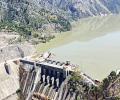
India has suspended the Indus Waters Treaty with immediate effect, accusing Pakistan of breaching the pact by refusing to negotiate modifications and engaging in sustained cross-border terrorism. The decision follows a recent terror attack in Jammu and Kashmir that killed 26 people. Pakistan has rejected India's move, calling it an "act of war."
Weeks after India placed the 1960 Indus Waters Treaty (IWT) in abeyance following the April 22 Pahalgam terror attack, Pakistan has signalled its willingness to discuss New Delhi's long-standing concerns about the treaty, sources said.

India has asserted that the Indus Waters Treaty with Pakistan will remain in "abeyance" until Islamabad "credibly and irrevocably" abjures support to cross-border terrorism. External Affairs Ministry spokesperson Randhir Jaiswal said that any bilateral talks with Islamabad will only be on vacation of illegally occupied territories of Kashmir by Pakistan. He also said that India is open to discussing the handing over of terrorists whose list was provided to Pakistan some years ago. India on April 23 announced a raft of punitive measures against Pakistan including suspension of the Indus Waters Treaty after the Pahalgam terror attack that killed 26 civilians.

The Cabinet Committee on Security (CCS) met on Wednesday under the chairmanship of Prime Minister Narendra Modi and firmed up the responses to the terror attack.

Another official said that India is planning to enhance its current hydropower capacity of around 3000 megawatts on the rivers that were earlier being used by Pakistan and a feasibility study in this regard is planned, the official said
India has stopped releasing water from the Baglihar Dam on the Chenab River and is planning similar measures at the Kishanganga Dam on the Jhelum River, following a recent terror attack in Jammu and Kashmir. These hydroelectric dams offer India the ability to regulate water releases. This decision potentially affects the Indus Waters Treaty, a decades-old agreement between India and Pakistan governing the use of the Indus River and its tributaries. The Baglihar and Kishanganga dams have been points of contention between the two nations in the past.
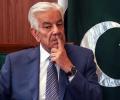
Pakistan's Defence Minister Khawaja Asif has issued a war threat against India, citing water security as a national concern. This comes as Pakistan grapples with a severe internal water crisis, attributed by experts to mismanagement, and India maintains its suspension of the Indus Waters Treaty following a terror attack. Asif accused India of "weaponising water" but admitted to lacking current data on the situation.

India to exploit to the maximum the capacity of Pak-controlled rivers -- Indus, Chenab, Jhelum as per the Indus Treat, source said.

Aziz said unilateral revocation of the treaty can pose a threat to Pakistan and its economy.
Emergency legal and constitutional consultations were held in response to India's unilateral move, and preliminary groundwork has been completed after which it has been decided to formally serve a diplomatic notice to India over the suspension of the treaty
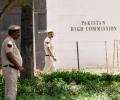
Pakistan is holding a high-level security meeting to formulate a response to India's suspension of the Indus Water Treaty and downgrading of diplomatic ties. The meeting, convened by Prime Minister Shehbaz Sharif, will include the National Security Committee, three services chiefs, and key ministers. The move comes after India blamed Pakistan for a terror attack in Pahalgam, which Pakistan has denied. Diplomatic observers warn that the escalation could further strain relations between the two countries.

Lieutenant Governor Manoj Sinha asserts that the Indus Waters Treaty was a 'historic mistake' and its termination will greatly benefit Jammu and Kashmir by allowing it to harness its hydropower potential.

'Militarily, it risks escalating tensions with Pakistan, potentially triggering conflict due to Pakistan's heavy reliance on the Indus.'

India on Monday extended the closure of its airspace for flights operated by Pakistan airlines by another month till July 24.
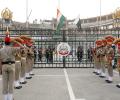
Pakistan's Foreign Office spokesperson Shafqat Ali Khan said on Friday that the ceasefire with India was holding and the country is committed to it. He also said that Pakistan is committed to making the ceasefire hold and de-escalation succeed, and then engagement to lead to stability and resolution of issues. Khan said that the two militaries have a channel of communication through the Directors General of Military Operations, through which they are working for de-escalation, in terms of the movement of troops. He added that Pakistan remains committed to the ceasefire announced on May 10 and lately, both sides have taken steps for de-escalation and return of stability.

India has closed its airspace to flights operated by Pakistani airlines in a retaliatory move following the Pahalgam terror attack. The ban will be in effect until May 23 and applies to all aircraft registered in Pakistan, as well as planes operated, owned or leased by Pakistani airlines and operators. This comes a week after Pakistan closed its airspace to Indian carriers. The move is part of various measures taken by the Indian government against Pakistan in the wake of the Pahalgam terror attack that killed 26 people.

The Pakistani military fired unprovoked shots across the Line of Control (LoC) in Kashmir for a second consecutive night, triggering retaliatory action from Indian troops. This escalation follows heightened tension between India and Pakistan after the Pahalgam terror attack that killed 26 civilians. Despite the exchange of fire, no casualties were reported. India has imposed a series of punitive measures in response to the attack, including the suspension of the Indus Waters Treaty and closing the Attari land-border crossing. Pakistan has responded in kind, closing its airspace to Indian airlines and suspending trade with India.

The CCS meet was held at the prime minister's Lok Kalyan Marg residence, a day after he held a meeting with the top military brass and accorded operational freedom to the armed forces on the "mode, targets and timing" of India's response to the April 22 attack that killed 26 people.
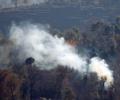
Pakistani troops continued to violate the ceasefire along the Line of Control (LoC) by resorting to unprovoked firing in Jammu and Kashmir's Poonch and Kupwara districts, army officials said. This was the fourth consecutive night that Pakistan resorted to unprovoked firing along the LoC and came amid heightened tension between New Delhi and Islamabad following last week's terror attack in Pahalgam. Indian troops responded swiftly and effectively.

AIMIM chief Asaduddin Owaisi slammed Pakistani politician Bilawal Bhutto-Zardari for his "blood would flow in rivers" remark and called former cricketer Shahid Afridi a "joker" for his comment on the Pahalgam terror attack. Owaisi also supported India's decision to suspend the Indus Waters Treaty and called for Pakistan to be placed on the FATF grey list. He also advocated for cyber attacks against Pakistan.
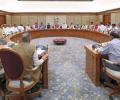
The meeting under the chairmanship of Prime Minister Narendra Modi has been convened at 11 am on Wednesday.
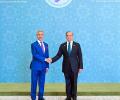
It was said that Sharif wanted the PML-N-led coalition government to utilise all available diplomatic resources to restore peace between the two nuclear-armed states, saying he was not keen on taking an aggressive position, The Express Tribune reported.

External Affairs Minister S Jaishankar clarified that there was no third-party intervention in the ceasefire with Pakistan during Operation Sindoor. He asserted that halting the operation was not linked to trade and refuted claims of mediation by US President Donald Trump.
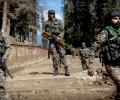
China hopes both sides will remain restrained, move toward each other, and work together to de-escalate the situation.

India has warned Pakistan against its unprovoked firings along the Line of Control (LoC) in Jammu and Kashmir as the directors general of military operations of the two armies spoke on the hotline amid the escalating tensions over the Pahalgam terror attack.
Pakistan's Deputy Prime Minister and Foreign Minister Ishaq Dar has warned India of a strong response, saying Pakistan will respond to a "brick with a stone" if India takes any action against Pakistan, amid heightened tensions following the April 22 terror attack in Jammu and Kashmir's Pahalgam. Dar alleged that India might have staged the Pahalgam attack to abolish the Indus Waters Treaty (IWT) and warned that any attempt by India to interfere with the treaty would be considered an act of war. He also said that Pakistan had no involvement in the Pahalgam incident and is getting support from countries like Saudi Arabia, China, the United Arab Emirates, the United Kingdom, Kuwait, Bahrain, and Hungary.
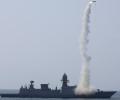
The visuals show the BrahMos anti-ship and anti-surface cruise missiles being launched from a fleet of warships, including Kolkata-class destroyers and Nilgiri and Krivak-class frigates, reaffirming the Navys operational prowess.

India has suspended the Indus Waters Treaty with Pakistan, citing sustained cross-border terrorism and security concerns. The treaty, brokered by the World Bank in 1960, governs the distribution and use of the Indus river and its tributaries between the two countries. India's decision follows a recent terror attack in Jammu and Kashmir, and has been met with strong condemnation from Pakistan.
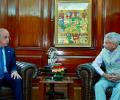
India briefed envoys of around 45 nations on the Pahalgam terror attack and its link to cross-border terrorism. The envoys were briefed in two batches by senior officials of the Ministry of External Affairs (MEA). India also announced punitive measures against Pakistan, including expulsion of Pakistani military attaches, suspension of the Indus Water Treaty of 1960 and immediate shutting down of the Attari land-transit post. Pakistan responded by shutting its airspace to all Indian airlines and suspending trade with New Delhi.

UN Secretary-General Antonio Guterres has called for maximum restraint between India and Pakistan following a deadly terror attack in Jammu and Kashmir. Guterres' spokesperson, Stephane Dujarric, said that the UN chief is following the situation "very closely and with very great concern." Dujarric also stated that any issues between the two countries "can and should be resolved peacefully, through meaningful, mutual engagement." India has downgraded diplomatic ties with Pakistan and announced a raft of measures, including expulsion of Pakistani military attaches, suspension of the Indus Water Treaty of 1960 and immediate shutting down of the Attari land-transit post in view of the cross-border links to the terror attack.
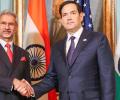
The phone conversation came amid escalating tensions between India and Pakistan over the April 22 terror attack that killed 26 civilians.
As tensions escalated between India and Pakistan following the deadly Pahalgam terror attack, Iran reached out to both countries, urging de-escalation. Saudi Arabia also expressed concern, with its foreign minister engaging in phone conversations with his Indian and Pakistani counterparts. Iran's foreign minister, Seyed Abbas Araghchi, emphasized the importance of bilateral relations, stating Tehran's willingness to "forge greater understanding" at this critical time. Saudi Arabia's foreign minister, Faisal bin Farhan Al Saud, spoke with both India's External Affairs Minister S Jaishankar and Pakistan's Foreign Minister Mohammad Ishaq Dar. Amidst heightened tensions, India has taken a series of punitive measures against Pakistan, including suspending the Indus Waters Treaty and downgrading diplomatic ties. Pakistan responded by shutting its airspace to Indian airliners and suspending all trade. Both countries exchanged warnings, with Pakistan emphasizing its commitment to "respond firmly to any aggression."

Pakistan's ambassador to Russia, Muhammad Khalid Jamali, has warned that Pakistan will respond with "full spectrum of force", including nuclear, if it is attacked or its vital water flow is disrupted. The warning comes amid heightened tensions between Pakistan and India following a terrorist attack in Jammu and Kashmir. Jamali also reiterated Pakistan's stance on the Indus Water Treaty, saying any attempt to stop or divert water flow would be considered an act of war. He urged de-escalation, emphasizing the potential danger given both countries possess nuclear weapons. Jamali further called for a neutral investigation into the Kashmir attack, suggesting the involvement of China and Russia. He also highlighted the need to address the root causes of the conflict, pointing to the unresolved Kashmir issue and its potential for resentment.

Puri said Pakistan was a country in "terminal decline" periodically using terrorism as an instrument of state policy.
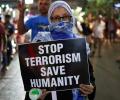
Pakistan has offered to join any neutral and transparent probe into the Pahalgam terrorist attack that killed 26 people. Prime Minister Shehbaz Sharif also warned India against any attempt to stop, reduce or divert the flow of water belonging to Pakistan, saying any such action would be responded to with full force and might. Sharif said Pakistan has always condemned terrorism in all its forms and manifestations and has endured immense loss of over 90,000 casualties and economic losses exceeding USD 600 billion. He also reiterated Pakistan's support for the right of self-determination of the Kashmiri people.
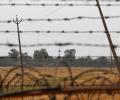
The United States on Thursday said it supports India's right to defend itself and its fight against terrorism as US Defence Secretary Pete Hegseth dialled Defence Minister Rajnath Singh amid rising tensions between India and Pakistan over the Pahalgam terror attack.

Main imports from the neighbouring country during April-January 2024-25 included fruits and nuts (USD 0.08 million), certain oil seeds and medicinal plants (USD 0.26 million), and organic chemicals.

Former Pakistan foreign minister Bilawal Bhutto had acknowledged his country's tango with terror operatives, saying that Pakistan has a past.
